
 Open in Claude
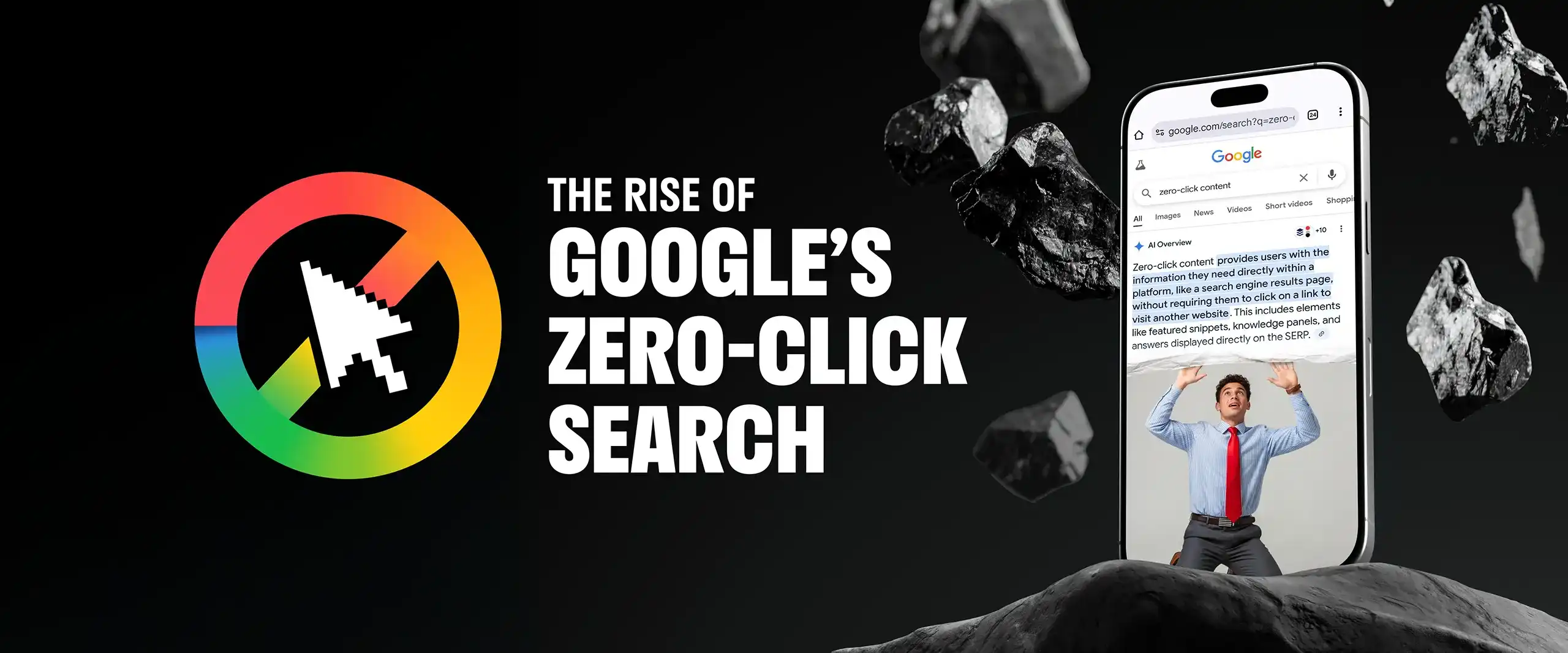
For twenty-five years, the open web ran on a simple loop: publishers produced content, Google sent traffic, advertisers paid for that traffic, publishers got paid. Google's May 2026 search overhaul retires that loop in public — and what is striking is not the change itself, but how publishers are receiving it. Resignation, not resistance. That is the tell.
- Google's May 2026 AI Search update turns the search box into a chat interface, accelerating the slide into a zero-click default.
- Publishers are no longer fighting the shift — they are pricing for it. One head of audience told Digiday in May 2026 they 'no longer consider Google as a primary referrer.'
- AI Overviews already serve more than 2.5 billion monthly users and AI Mode more than 1 billion, per Google (May 2026). The page-view economy is being quietly dismantled.
- The replacement is the citation economy: brands earn visibility by being inside AI answers; publishers earn revenue when their content is the source.
- Marketing and publishing leaders re-architecting around citation in 2026 will compound an advantage that the rest will rent back at a premium.
What the citation economy is
The citation economy is the value chain in which AI Search engines and conversational agents extract, synthesize, and cite content from publishers to answer user queries — and in which brand visibility is earned by being inside the answer rather than ranked above it. The unit of value moves from click to citation.
The parallel: open-web search economy vs agentic-web economy
In the open-web economy, attention was rented per click. Advertisers bought ranked placements on a SERP, and publishers were paid via the traffic that flowed through. In the agentic-web economy, attention is allocated per citation. The SERP collapses into a synthesized answer, and the click is no longer the unit of exchange.
The mechanic is different, but two needs do not change: brands still need to be seen, and publishers still need to be paid for being the source of record. The question is who builds the rail that pays them for it.
What the sources said, and what we verified
Digiday's May 2026 reporting captures the shift in tone: weariness rather than alarm. Anonymous executives at a major global news organization and a Condé Nast title describe the page-view economy as 'all but dead.' Press Gazette reports that in Q1 2026, AI Overviews occupied article links in health sections of major news brands roughly 72% of the time.
The Reuters Institute (May 2026) documents the structural response: collective licensing bodies and coalitions including SPUR (BBC, Financial Times, Guardian, Mediahuis), the Really Simple Licensing Collective with about 1,500 media members, and the Danish Press Publications Collective Management Organisation, which has sued OpenAI and LinkedIn since February 2026. Independent traffic data from Similarweb confirms the trajectory: organic traffic to US publishers declined in the year after AI Overviews launched in May 2024.
The contrarian read
Steelman — licensing and niche authority will close the gap
A credible counter-argument, voiced in the Reuters Institute reporting and by OpenAI CEO Sam Altman in May 2026, runs as follows. Authoritative publishers gain leverage in AI Search because models preferentially cite expertise. Licensing deals, collective management organisations, and AI-agent micropayments will redistribute the new pie. The shift is painful but ultimately rebalances toward quality.
Where we disagree
Two flaws. First, the timeline. DPCMO CEO Karen Rønde confirms most large platforms are declining voluntary mediation; the path is now lawsuits. Licensing settles on a multi-year horizon while ad CPMs, traffic, and editorial headcount fall today. Second, the structure. Licensing pays for training inputs. It does not pay continuously for being cited at the moment of consumer intent. Influence without an ad rail is leverage stripped of revenue.
Both sides of the market
For Brands, Advertisers, Agencies
Treat AI visibility as a discipline distinct from SEO and SEA, with its own owner, KPIs, and budget. CMOs should ringfence a 2026 test line for AI Search advertising inventory. Media buyers should audit how much of the funnel already routes through AI surfaces, and what the brand looks like inside a synthesized answer. SEA and acquisition managers should price rising CPCs under Google's AI Max as a structural cost. Agencies should build the practice as a service line before clients ask why a competitor is being cited and they are not.
For Publishers
Stop pricing the future on traffic recovery. Price it on being the source of record AI engines cite. That means three moves, in order: protect the IP through machine-readable licensing standards such as RSL, SPUR, and national CMOs; restructure content for AI extraction without giving it away, as The Economist is doing with its two-track human and agent-readable surfaces; and build a revenue rail that pays per citation, not per click. Microsoft's stated 'sustainable content economy for the agentic web,' Amazon's content marketplace discussions, and ProRata's embedded ad units are the early shape of that rail.
What's next at the frontier
Three signals point to where this lands within 18 months. Sponsored citations: AI engines are quietly experimenting with ad-supported answer formats, and Microsoft has publicly framed the direction. Micropayments and marketplaces: Sam Altman backed an AI-agent micropayment model in May 2026, and Amazon is in talks with publishers about a content marketplace. Agentic search itself: Google's preview of AI agents in search, launching summer 2026 on Gemini 3.5 Flash, is the first time consumers will routinely send agents to read publisher content for them. The category is forming. Pricing power will sit with whoever standardizes it first.
Conclusion
Hold on to this: the open-web link economy is being replaced by an agentic-web citation economy, and neither brands nor publishers have a payment rail built for it yet. Smalk AI is that rail — an AI Search ad network connecting brands that need to show up inside AI-generated answers with the publishers whose content fuels those answers, placing native ads for AI agents and opening a new revenue stream for the supply side of the citation economy. What to watch next: which platform, coalition, or regulator sets the first pricing benchmark for sponsored citations — that is the moment the category prices in.