 Open in Claude
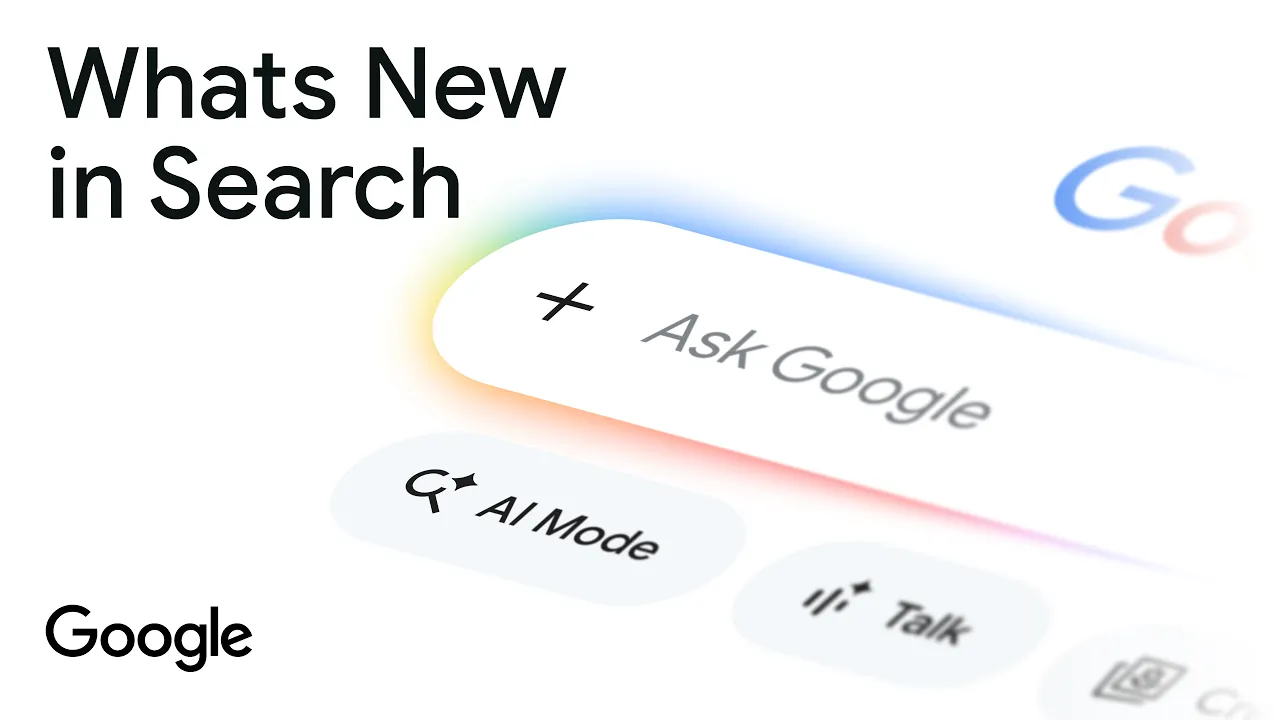
At Google I/O 2026, the company declared its AI overhaul of search the biggest change in more than 25 years. The announcement buried the real lead: Gemini Spark, a background AI agent that browses the web on your behalf — overnight, while your laptop is closed, without you ever issuing a query. When an AI agent searches at 3 a.m. on your behalf, no human clicks an ad, no publisher earns a pageview, and the open-web economy's fundamental billing event simply does not fire.
- Google's Gemini Spark is an always-on AI agent that searches, browses, and acts without user presence — making the human click optional in a 25-year-old ad model built entirely around it.
- Publisher referral traffic is already down 33% globally and 60% for small publishers (Chartbeat, March 2026); agentic search will widen that gap, not close it.
- AI engines already ingest content at rates exponentially above their referral output: Anthropic's crawl-to-referral ratio is 73,000:1 and OpenAI's is 1,700:1 (Cloudflare, 2025).
- The ad layer is already forming — Google tested sponsored placements inside AI Mode in February 2026, and OpenAI's CFO confirmed ads are coming to ChatGPT.
- Both markets need a new model: brands need citation-based visibility inside AI answers; publishers need to be paid for being the cited source, not just the crawled content.
What agentic search is — and why it changes the economics
Agentic search is the practice of an AI model autonomously issuing queries, synthesizing results, and acting on them without a human present at the moment of query. Unlike AI-augmented search — where a human types a question and an AI summarizes results — agentic search removes the human from the loop entirely. Gemini Spark, announced at Google I/O 2026 and running on Gemini 3.5 via Google's Antigravity agent harness, is the first major commercial deployment at scale: users assign it tasks by email, and it executes across Google Cloud infrastructure overnight.
The parallel: open-web search economy vs the agentic web
For 25 years the open web ran a clean loop: a human typed a query, Google returned ranked links, the human clicked, a publisher earned a pageview, and an advertiser paid for the impression. Every step required human presence — that presence was the billing event. In the agentic web, an AI agent issues the query, synthesizes an answer from publisher-sourced content, and delivers a direct response with no click, no pageview, and no ad impression. The underlying need has not changed. Every mechanism that funded each participant in that loop has.
What Time reported — and what the data confirms
Billy Perrigo's May 20, 2026 piece in Time frames Google I/O 2026 as the most significant restructuring of search in the company's history, and correctly identifies Gemini Spark's background browsing capability as the structural inflection: searches performed not by humans, but by AI agents acting on their behalf. Independent data validates the scale. Similarweb confirms zero-click searches rose from 56% to 69% between May 2024 and May 2025. Chartbeat (March 2026) documents a 60% decline in search referral traffic for small publishers over two years and a 22% decline for large ones. Press Gazette reported global Google referral traffic down 33% in the year to November 2025, with the U.S. falling 38%.
The contrarian read: niche publishers will gain leverage
The steelman
A credible counter-argument — echoed in Press Gazette's 2026 search fragmentation analysis and several Q1 2026 Forrester briefings — holds that authoritative niche publishers gain leverage as LLMs preferentially cite domain expertise over generalist content. Proponents point to ChatGPT referral traffic growing 3.26x year-over-year (Digiday, 2025) as evidence that AI platforms will become a meaningful distribution channel in time.
Where the argument breaks
Citation share without a payment rail is influence stripped of revenue. The Cloudflare crawl-to-referral data is the definitive rebuttal: Anthropic ingests 73,000 pages per referral sent; OpenAI, 1,700. Even if both platforms triple their referral output, the arithmetic does not close a 33–60% decline in Google traffic. When Gemini Spark is the query issuer — operating at 3 a.m. with no destination browser open — the referral question is structurally moot. The niche publisher thesis is correct about influence. It is wrong about economics.
Both sides of the market
For Brands, Advertisers, and Agencies
The 58% decline in click-through rate for top-ranked pages in AI Overview queries — documented in antitrust filings and analyzed by ALM Corp in 2025 — is not an SEO problem. It is a media buying problem. CMOs allocating budget to rank first on a SERP that a growing share of queries never surfaces are buying real estate in a neighbourhood being demolished. Audit how much of your awareness funnel already depends on AI-mediated discovery, treat citation frequency in AI answers as a standalone KPI, and ringfence a 2026 test budget for AI Search inventory before the market prices the early-mover advantage away.
For Publishers
The crawl-to-referral ratio is the business problem in a single number. The 2024–2025 licensing deals with OpenAI and Google — flat-rate payments of $5M to $60M annually (Digiday, 2025) — were advance payments for content access, not a scalable revenue model tied to citation volume. Five of the six most recent OpenAI publisher deals no longer include model training rights, a signal that real-time content is now the priced asset — still on terms publishers did not design. The architecture that closes the loop is citation-based advertising: native placements inside AI answers, with publishers compensated for being the cited source.
What is already moving at the frontier
Three signals in the 90 days before I/O 2026 define where this category lands. Google began testing sponsored placements inside AI Mode in February 2026 — the first structural signal that the platform will commercialize the citation layer. OpenAI's CFO confirmed ads are coming to ChatGPT, creating a second major AI advertising surface likely before end of 2026. Microsoft launched the AI Performance Dashboard in March 2026, giving brands systematic visibility into where they appear inside AI-generated answers — establishing that AI citation is measurable and, therefore, sellable. Pricing power sits with whoever standardizes it first.
Conclusion
Hold this: when the searcher is a machine running overnight without you, the 25-year-old ad model built on the human who clicked has no billing event — and both brands and publishers are already paying for that structural gap. Smalk AI is building the billing event for the citation economy: an AI Search ad network that places native ads inside AI-generated answers for brands that need to be cited, and opens a revenue stream for the publishers whose content makes those answers possible. Watch for when Google or OpenAI publishes a standardized pricing model for sponsored citations — that is the moment the category prices in, and the window for early-mover advantage closes.