
 Open in Claude
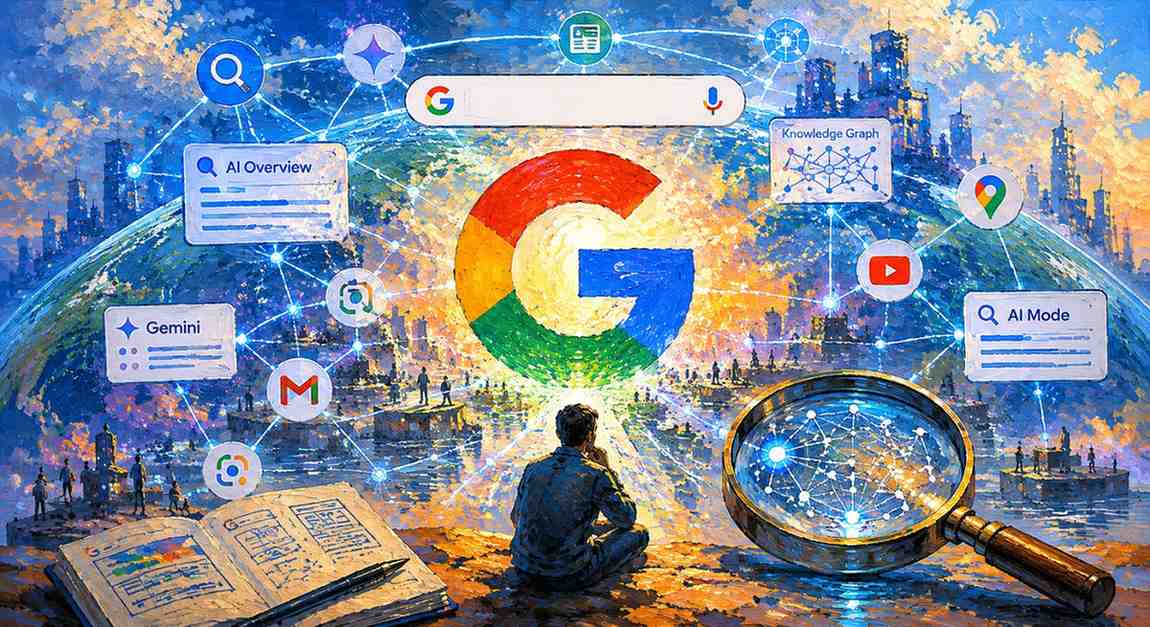
Google just gave users a way to favorite their preferred websites inside AI answers. Framed as a discovery feature, it is something larger: Google assembling a closed AI Search network where it owns the discovery layer, owns the ad layer, and rents the content layer from publishers it no longer needs to send traffic to.
- Preferred Sources, the new article carousels, and the Highly Cited badge are not user features — they are the curation controls of an owned-and-operated AI Search network.
- AI Mode crossed one billion monthly users in May 2026, and Google is already inserting Sponsored Stores and Direct Offers into the answer itself.
- Publishers supply the content that grounds the answers but sit outside the payment rail, while Google monetizes the surface they feed.
- The brands and publishers that treat AI visibility as a budgeted discipline in 2026 — not a hope — will compound an advantage the rest will pay to catch up to.
What an owned AI Search network actually is
An owned AI Search network is a closed loop in which one platform controls how content is discovered, how it is synthesized into answers, and how those answers are monetized — while the content itself is supplied by third parties. Google is building exactly that. The old open web routed users out to publishers; the new architecture keeps them inside Google's surface and decides, query by query, which sources surface and which ads run alongside them.
From the open SERP to the closed answer surface
In the open-web economy, Google was a switchboard. It indexed the web, ranked ten blue links, and sent the click onward; the publisher monetized the visit. The mechanism was referral. In the agentic-web economy, Google is the destination. AI Overviews and AI Mode synthesize the answer in place, and the publisher's content becomes raw material for a response the user rarely leaves to verify. The mechanism shifts from referral to ingestion.
Preferred Sources, carousels, and Highly Cited badges are the curation layer of that closed surface. A traditional network decides which inventory to show; Google is now deciding which sources to cite — and letting users pre-select favorites so the network feels personalized rather than controlled.
What Google announced, and what the numbers confirm
Google's Product Manager for Search, Duncan Osborn, announced that Preferred Sources is expanding from Top Stories into AI Overviews and AI Mode, alongside new article carousels and a wider Highly Cited badge. Google says people are twice as likely to click a Preferred Source and that users have already selected more than 345,000 unique sources. Independently reported figures confirm the scale that makes this matter: AI Mode passed one billion monthly active users as of May 2026, per Google's own May 19 data report, and the company is simultaneously testing Sponsored Stores and Direct Offers inside those answers.
The control layer and the ad layer are arriving together. That is not a coincidence — it is the blueprint of a network.
Why this looks like publisher empowerment but functions as enclosure
The case that Preferred Sources hands control back to publishers
The strongest version of the optimistic read, voiced by SEO leaders at the Daily Mail and others in Press Gazette in early 2026, is that 'Google Zero' is overstated and that distinctive, high-quality publishers still win. On this view, Preferred Sources is one of the few mechanisms Google has offered that puts discoverability back in publishers' hands: a reader who favorites your site sees more of you inside AI answers. Managed decline, the argument goes, is not death.
Why a curation toggle is not a payment rail
But discoverability is not revenue. Even a favorited publisher is cited inside an answer the user rarely leaves — and the data is stark. Similarweb reported zero-click rates near 69% for news queries after AI Overviews launched, and Pew found users click citation links inside an overview only about 1% of the time. Preferred Sources raises the odds of being the source; it does nothing about being paid as one. A control that lets you influence citation while Google captures the ad spend around it is enclosure dressed as empowerment.
What this means for brands and for publishers
For CMOs, media buyers, and agencies: treat AI visibility as owned-network inventory
Stop modeling AI Search as an extension of SEO. Google is building inventory inside the answer — Sponsored Stores, Direct Offers, sponsored citations — and that inventory will price like a walled garden, not like organic. CMOs should ringfence a 2026 test budget for AI Search placements; media buyers should audit how much of the funnel already depends on AI surfaces; agencies should stand up the practice as a service line before a client asks why a competitor is inside the answer and they are not.
For publishers: price your role as the source, not your recovered clicks
Do not build your 2026 plan on traffic recovery inside Google's network. Build it on being the source of record AI engines must cite — and on getting paid for that role on rails you do not control today. Preferred Sources is worth claiming for visibility, but it is a lever inside someone else's network. The durable revenue model is citation-based advertising that compensates the source, served wherever the answer is rendered.
Three signals to watch over the next 18 months
Three developments will show how closed this network becomes. First, whether Google extends sponsored formats from shopping into editorial and informational answers — the moment citation itself becomes ad inventory. Second, whether granular opt-out controls arrive, letting publishers leave AI Overviews without losing search indexing, a remedy regulators like the UK CMA are pressing for. Third, whether an independent payment rail for cited content emerges before Google's network sets the default price of zero. Whoever standardizes that rail first sets the terms for everyone else.
Conclusion
Hold on to this: Preferred Sources is not a gift to publishers — it is Google curating the discovery layer of an AI Search network it also monetizes, while the content that grounds the answers sits outside the payment rail. The open question is who builds that rail. Smalk AI is positioned as the answer: an AI Search ad network that places native ads for AI agents and opens a new revenue stream for the publishers whose content fuels those answers — independent of any single platform's walled garden. What to watch next: whether Google turns editorial citations themselves into ad inventory, because that is the moment the network closes.